Pages

Pie Crust Cookie Search

Sunday, November 8, 2015

Bruschetta with Roasted Cherry Tomato, Rosemary and Onion

Although it is November and most Americans are thinking about cooking turkeys and pies, the long summer meant that Betsy and I only recently finished harvesting our gardens. Now I am working to deal with tomatoes (red and green), chard, last green beans, sweet potatoes, and the last of the raspberries. Today I came across this recipe which helped me use most of my cherry tomatoes.


Print

Bruschetta with Roasted Cherry Tomato, Rosemary and Onion


Adapted from Epicurious
Serves 6-10, depending on if it's a meal or a snack

For the topping:

1/2 c olive oil
3 large garlic cloves, minced
3 teas finely chopped fresh rosemary, although I think you could use dried (only 1 1/2 teas)
3/4 teas salt
1 teas freshly ground pepper
2 pounds cherry tomatoes (I used a variety of types), halved
1 small onion, sliced or chopped
2 teas fresh lemon juice
ricotta cheese, optional
baby arugula, micro greens, or parsley, optional


Mix the oil, garlic, rosemary, salt, and pepper in a large bowl. Add the tomatoes and onions and stir to coat. Let stand for 5 minutes or so. Line a rimmed large baking sheet with parchment paper and dump the tomato mixture on to the paper. Spread the mixture out so tomatoes are in a single layer. 

Place in the center of your oven and turn on the oven to 250F. (Unless your oven's preheat feature is so hot you think it may burn the mixture--then preheat.) Cook for several hours until the tomatoes have become wrinkly and have reduced in size. The cooking sauce should have thickened noticeably and will be similar to tomato sauce. Remove from oven and stir in lemon juice. 

Allow to cool a bit and dig in or allow to rest until completely cool. Spread on top of prepared bread and enjoy. If available, top with a dollop of ricotta cheese and some greens and serve. 

This can be frozen so you can enjoy the flavor of tomatoes in the wintertime.

For the bread:

Toast slices of baguette or ciabatta. Rub with a cut piece of garlic while still hot.  

Notes: 

I have found that tomatoes can be roasted at almost any heat. I did it at this low heat today so I could leave the kitchen and go dig sweet potatoes. If you roast them at a higher temperature (as high as 425F) you will have to shorten the time and check more often to keep them and the onions from scorching. 

To make this more of an open face sandwich lay a piece of prosciutto on the toast before adding the other ingredients.


Thursday, October 29, 2015

Chard and Caramelized Onions, Pine Nuts, and Raisins

Here's one more chard recipe for anyone with an abundance. This may be my favorite way to prepare chard (and it's one of the few dishes with raisins I'll eat happily).


Print

Chard and Caramelized Onions, Pine Nuts, and Raisins


I've been cooking this so long, I don't remember where I picked it up and am having trouble finding an original source. I'm going to give a recipe, but know all of this can be fiddled with; amounts and ingredients can be altered and it will still taste good. 

This recipe will serve about 4.

2 T pine nuts
2 T oil, olive is good but not required
1 onion, sliced or chopped
about 1 pound chard
salt and pepper to taste
2 T raisins, I like golden best, despite photo 
1-2 T balsamic vinegar, optional

In a large, deep skillet, toast the pine nuts over medium heat until golden; remove to a bowl and set aside (watch carefully or they may scorch). Place the oil in the pan and add the onions. Lower the heat and cook until golden brown and soft. If they start to burn, lower the heat again and add a tablespoon or so of water to cool things off. 

Prep the chard while the onions are cooking by rinsing well and removing the stalks. Chop the stalks to about 1/2 inch dice. Slice or tear the chard into rough pieces about 2 by 3 inches. Don't worry about water on the chard; it will be just enough for cooking it all perfectly. Add the chard leaves and stalks as well as the raisins and return the heat to medium low. Cook until the stalks are tender about 10-15 minutes. Stir in the vinegar, add salt and pepper and taste for seasoning. Serve immediately.

Wednesday, October 28, 2015

Garlicky Chard

Another to help my poor chard victims. This is very similar to Slow Cooked Chard but is faster.

Print

Garlicky Chard


Source: Vegetables Every Day by Jack Bishop
Serves 6ish

2 T extra virgin olive oil
2 medium onions, halved and sliced thin
4 medium garlic cloves, minced
2 1/2 lbs chard, stems and thick ribs discarded, leaves washed, shaken to remove water, and chopped roughly (about 12 packed cups)
salt and freshly ground black pepper

Heat the oil in a large stockpot or Dutch oven. Saute onions in oil over medium heat until golden brown, 8-12 minutes. Add garlic, then stir once or twice until fragrant. Add the chard, stir well, cover, and cook until wilted, about 5 minutes. Stir two or three times as the chard cooks. Season with salt and pepper to taste. Simmer uncovered for several minutes to evaporate excess liquid, then serve.

Slow Cooked Chard

Last night I brought a garbage bag full of chard to my book club. A garbage bag. To give away. Because the forecast predicted a freeze and I overplanted chard and I hated the thought of wasting it. I am officially a crazy garden lady.

my chard patch

For the uninitiated, chard is a leafy green vegetable with a hard stalk. Typically stems and thick ribs are removed and discarded, though unlike kale, the stems are edible. When a recipe calls for just leaves, I don't bother to cut out the ribs; I just remove the bottom portion of the stem. Chard cooks down significantly, so don't be shocked by what looks like way too much. I find it easiest to wash chard in a clean sink; submerge in water and swish around for a minute or so. Rinse it at least twice to make sure you remove all the dirt. Then use your biggest cutting board for chopping, and work in batches.

Chard can be used in a number of ways. We often substitute it for spinach and other greens, though mature chard isn't great in a salad and chard requires less time to cook than kale or collard greens. Though the recipe below requires a long cooking time, it's mostly hands off, leaving you free to finish other things for the rest of the meal.

Print

Slow Cooked Chard


Source: Vegetables Every Day by Jack Bishop
Serves 6ish

2 lbs chard, washed and shaken to remove excess water
3 T extra virgin olive oil
1 medium onion, minced
2 medium garlic cloves, minced
1/4 c chicken or vegetable stock
salt and freshly ground black pepper

Prepare the chard: slice off the thick stems and ribs from the chard and cut into 1/4-inch dice. Slice leaves crosswise into 1/2-inch-wide strips. Keep stems and leaves separate.

Heat oil in a large Dutch oven or x-quart pot over medium heat. Saute onion in oil until golden, 5-10 minutes. Add garlic and saute for a few seconds until fragrant. Stir in the chard stems, then add stock with salt and pepper to taste. Cover and reduce heat to medium-low. Cook, stirring occasionally, until chard stems are starting to lose their shape, about 30 minutes.

Raise heat to medium, stir in the chard leaves, cover the pan, and cook, stirring occasionally, until the leaves have wilted and are tender, 12-15 minutes. Taste and add salt and pepper, if necessary, before serving. 

Chard Soup with Cumin, Cilantro, and Lime

In my garden one of the last vegetables still standing, and looking beautiful, is chard. Here's a way to use it, particularly nice on a cooler day.


Print

Chard Soup with Cumin, Cilantro, and Lime


Adapted from Vegetable Literacy by Deborah Madison
Serves 4-6

8 c packed, rinsed, and trimmed chard leaves, about 1 pound without stems (let sit in colander to drain)
2-3 T olive oil
1 onion, sliced
1 small potato (about 4 oz.) scrubbed and thinly sliced
1 carrot, scrubbed and sliced
2 T tomato paste
1 1/2 teas ground cumin
1 teas ground coriander
1 c finely cut cilantro stems and leaves
1 teas salt
5 c water
1/2 c sour cream or yogurt
freshly ground pepper
grated zest and juice of 1 lime

Heat the oil in a soup pot over medium heat. Add the onion, potato, and carrot and cook, stirring occasionally, until softened but not cooked completely. Stir in the tomato paste, cumin, and coriander smashing them into the vegetables. Allow to cook for a minute to bloom the spices. Stir in the cilantro and lay the still wet chard leaves on top; sprinkle the salt over the leaves. Cover the pan and allow the leaves to cook down substantially before adding 5 c water. Bring to a boil and then lower the heat to a simmer. Cover partially, and simmer until the potato has softened completely and the chard is soft.

Cool slightly, then add the sour cream and puree in a blender until smooth. (You may have to do this in batches.) Or try a good stick blender (mine didn't work well). Return the soup to the pot over gentle heat. Taste for salt, season with pepper, and stir in the lime zest and juice. Ladle into bowls, top with a dollop of sour cream or yogurt, and serve.

You can add texture to this soup by serving with fresh herbs (more cilantro or chives, especially), croutons, crisply toasted  and buttered bread crumbs, cooked rice, or toasted thin strips of tortillas.

This soup may be cooked with other tender greens such as sorrel, wild nettles, lovage leaves, lamb's quarters, or others in the goosefoot family. Combinations would work, too.

Note: The first time I made this, I left out the tomato paste because I was serving it to someone with a tomato intolerance; it tasted just fine.

Mixed Shell Beans and Greens

This recipe is adapted from a quick recipe that uses canned black-eyed peas and collard greens. I am more likely to have chard in my garden so that is what I use. If you want to cook this recipe but can't follow my directions (don't have fresh shell beans or want a quick version) see the link below.

Several years ago I began to grow black-eyed peas in my garden to add nitrogen to the soil which helped increase the size of garlic planted successively. An added benefit is the lovely "peas" I harvest each year. The legumes were something my eastern-raised mother never served me in our western home. I discovered this southern food much later when I moved to Virginia. In the years since I have experimented with other drying beans as well: pink and maroon Hopi beans, purple striped dragon tongue beans, and this year a purple and white Kenyan heirloom bean called kebarika.

Since I grow these, I like to use them in their "shell" state when they are mature but not dry. Although the original recipe calls for black-eyed peas exclusively, I have used a variety and it looks quite pretty with the variations in sizes and colors.

Hopi beans, Dragon Tongue beans, Black-eyed Peas

Print

Mixed Shell Beans and Greens


Adapted from: cookscountry.com

6 slices of bacon, cut into 1/2-inch pieces
1 onion, halved and sliced thinly
1 teas salt
4 garlic cloves, minced
1/2 teas ground cumin
1/2 teas pepper
1/4 teas red pepper flakes
1 c canned diced tomatoes or 2 c chopped garden tomatoes
1 1/2 c chicken broth (low sodium)
3 cups fresh black-eyed peas, subbing some with other shell beans
10 large leaves Swiss chard, torn or coarsely chopped
1 T cider vinegar
1 teas sugar

Cook bacon in Dutch oven over medium heat until crisp, 5-7 minutes. Transfer bacon to paper towel-lined plate or to a bowl, if the extra bacon fat doesn't worry you. Set aside.

Discard all but 2 T bacon fat. Add onion and salt and cook, stirring often, until golden brown. Add garlic, cumin, pepper, and pepper flakes, and cook for about 30 seconds, until fragrant.

Add tomatoes and juices and cook for several minutes until the tomatoes break down and mixture becomes sauce like. Stir in chicken broth and bring to a boil. Add beans and reduce heat to simmer for approximately 45 minutes until they have become tender. Add chard and cook for about 5 minutes until wilted. (If you use other greens such as kale or collards, you'll have to cook them longer.) Stir in bacon, sugar, and vinegar, taste for seasonings, and serve.


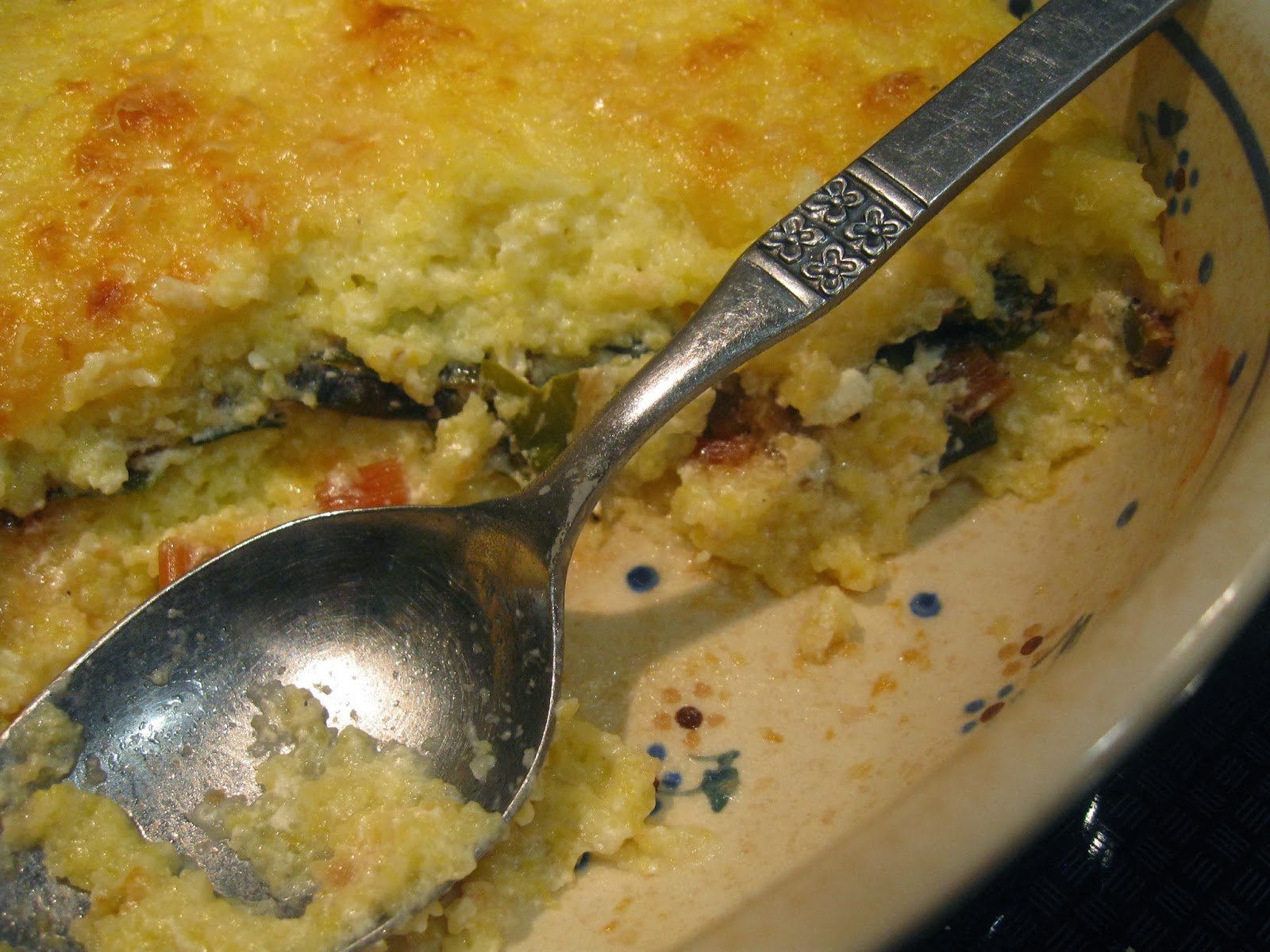
Baked Polenta with Cheese and Swiss Chard

Here is a versatile casserole which can serve as a side dish, a meatless main dish, or a light meal on its own. I'll admit that mozzarella cheese called for didn't taste quite cheesy enough for me. I plan to substitute some sharp cheddar or asiago next time (I'll let you know how that goes). I think you could add some crumbled cooked Italian sausage to the chard if you don't want to go meatless.


print

Baked Polenta with Cheese and Swiss Chard


Adapted from The Washington Post which adapted it from The Best Casserole Cookbook Ever  by Beatrice Ojakangas
Serves: 6-8 as a side or 5-6 as a main dish

For the chard layer:

1 T olive oil
4 large cloves garlic, minced
1 bunch Swiss chard, stems and leaves separated and coarsely chopped (2 to 2 1/2 c--but I used more like 4 c)
salt and pepper
1 T water

For the polenta:

2 c milk (at least 2 %)
1 1/2 c water
1/2 teas salt
1 c polenta (you may substitute corn grits or stone-ground cornmeal, don't substitute instant polenta)
1/4 c freshly grated Parmesan cheese
1 T unsalted butter
1 c shredded cheese, mozzarella for mild flavor, medium or sharp cheddar or asiago for more flavor
1/3 c sour cream

Preheat the oven to 400F when you start making the polenta. 

For the chard:

Heat the oil in a large skillet over medium heat. Add the garlic and cook, stirring, for 30 seconds, until fragrant; add the stems from the chard. Season lightly with salt and pepper, and stir to combine; add the water, cover and cook for 2 minutes, then add the leaves. Cover and cook for about 5 minutes, until the leaves are wilted.  Remove from the heat, uncover and let cool. Taste and add salt and pepper as needed.

For the polenta:

Combine the milk, water, and salt in a large saucepan over medium-high heat. Bring to a boil, then reduce the medium-low heat and slowly whisk in the polenta. Cook, whisking constantly, for about 5 minutes. Then let it cook, stirring frequently, until the mixture has thickened to the consistency of mashed potatoes. Add 2 T of the Parmesan along with the butter and the mozzarella cheese to the polenta, stirring until well incorporated.

Spread half of the polenta mixture in a buttered  2 1/2- to 3-quart casserole dish. Then spoon the chard mixture evenly on top. Spread the sour cream in as smooth a layer as you can. Carefully cover the layers with the remaining polenta. Top with the rest of the Parmesan cheese. Bake, uncovered, for 20-25 minutes until the top is golden.

This can be assembled a day before baking, but I advise you let the dish sit out of the refrigerator for an hour before putting it in a hot oven. Add about 5 minutes to the baking time.