Pages

Pie Crust Cookie Search

Showing posts with label main dish. Show all posts

Thursday, July 27, 2023

Forager's Pasta

This recipe comes from a lovely book titled, I Dream of Dinner (so You Don't Have To) by Ali Slagle. Her recipes are in a narrative form and allow for tweaks and substitutions and are flexible in amounts, so I'll set this up the way I made it. I'm glad to have run into this recipe since I'm fond of savory dishes which include sweet spices. 


print

Forager's Pasta


Source: I Dream of Dinner (so You Don't Have To)
Serves: 4-7

1 pound mushrooms of any variety or several varieties, cut or torn into bite size pieces
1 can chickpeas, drained and rinsed
salt and pepper to taste, remembering you'll use some of your pasta water which will add to total salt
2 strips of lemon zest and 3 T lemon juice
8 T butter, cut into 8 pieces and kept in fridge until needed
cook's choice of herbs and spices, such as 1 teas black peppercorns or fennel seeds, 1 half cinnamon stick, broken, or some fresh grated nutmeg, at least 8 sage leaves, 4 bay leaves, 3 thyme sprigs, and or 2 rosemary sprigs
3 T olive oil
12 oz short pasta but not necessarily tiny pasta

Heat the olive oil in a large skillet or a Dutch oven and cook the mushrooms and chickpeas. Season with salt and pepper. Shake the pan occasionally and cook until contents are browned, 10-15 minutes. Meanwhile, start a pot of water to boil. If you cook the pasta in a smaller amount of water, you'll have starchier water which will be good for your final product. But you'll have to stir the pasta while it cooks so it doesn't clump.

Coarsely grind or smash the spices you want to use and strip the herb leaves off their stems. If desired, you can chop the sage and/or rosemary. 

When the water boils, add the pasta and cook until almost al dente. Reserve at least 1 cup of the cooking water and drain.

When the chickpeas and mushrooms have finished, add the butter around the edges of the pan. Stir in the herbs and spices and cook while the butter foams and turns golden. Add the pasta to this mixture and cook, stirring while dribbling in some of the pasta water until the butter and the water form an emulsion. Taste and season if you need more salt and pepper. Pull out any sticks or stems left from the herbs and serve. 

Note: I used fennel seed, cinnamon stick, sage and bay leaves. For serving, I garnished with chopped parsley. In the summer I may garnish with basil. 
Wednesday, May 3, 2023

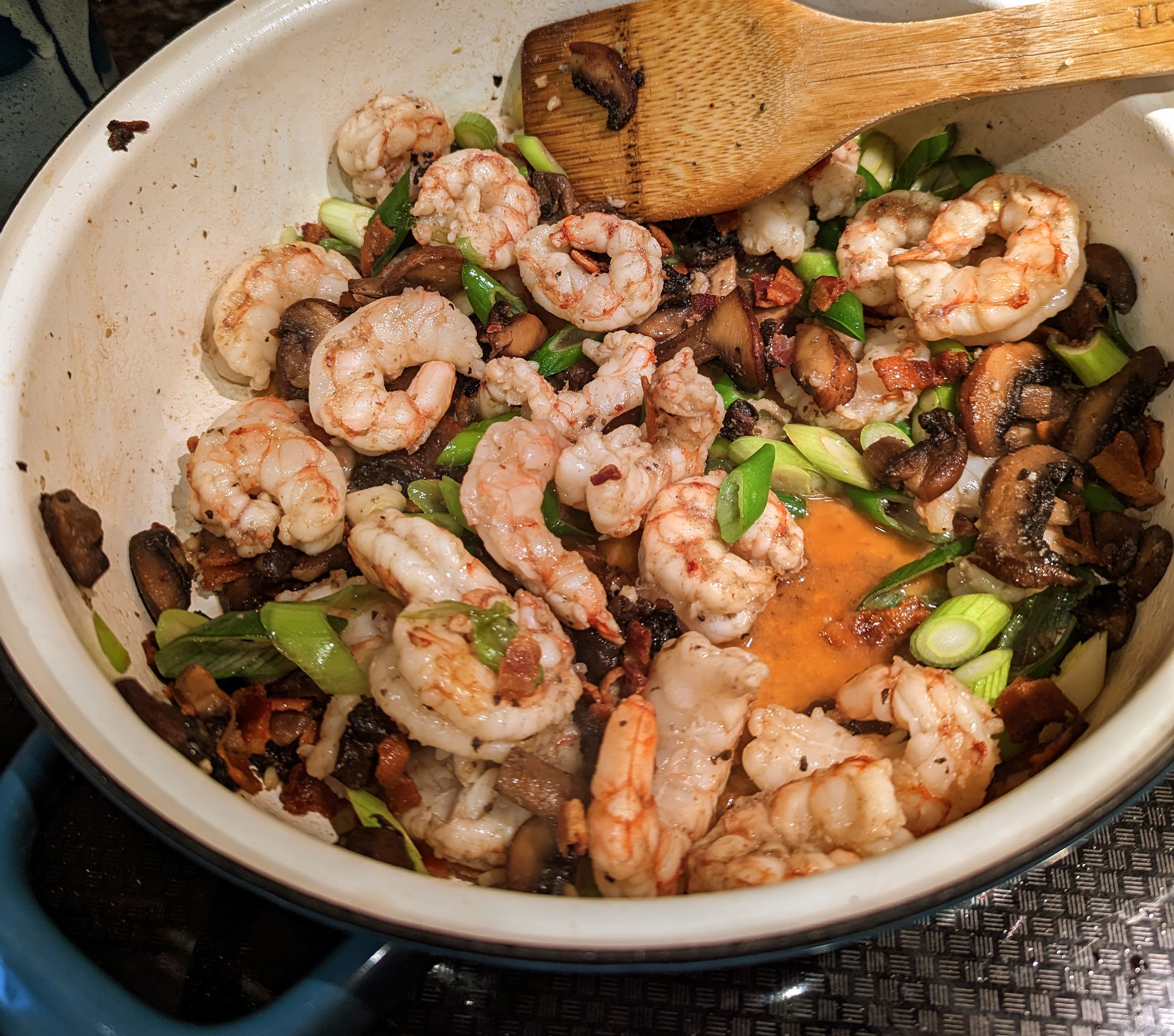
Shrimp and Grits

When I leave my landlocked state and spend time oceanside, this is one of my favorite things to order at a restaurant. Thankfully, freezers make it possible to enjoy this dish other places and other times. 


print

Shrimp and Grits


Source:  The 150 Best American Recipes by Fran McCullough and Molly Stevens
Serves: 4

Grits:

4 c water
1 c grits (preferably stone ground)
1/2 teas salt
2 T butter
1 c grated sharp cheddar cheese (4 oz)
1/2 c freshly grated Parmesan cheese
freshly ground white pepper, cayenne pepper, and nutmeg, all to taste

Shrimp:

6 slices bacon, cut into small pieces
oil for frying
1 pound shrimp, peeled, deveined if desired, rinsed and patted dry
2 c wiped and cleaned mushrooms, sliced
1 cup sliced scallions
1 large garlic clove, minced
4 teas fresh lemon juice
Hot pepper sauce to taste
salt and freshly ground black pepper
1/2 c chopped fresh parsley

I found it easiest to prep the ingredients for both portions of the meal before starting to cook either. 

To make the grits:

In a large heavy saucepan, bring the water to boil and gradually stir in the grits. Reduce the heat to it's lowest point and cook for about 20 minutes, stirring frequently.  When grits are thick and tender, stir in the salt, butter, and cheeses. Add about a pinch of each of the spices and taste to see if you would like to add more.

To make the shrimp:

This can be started as the grits finish up. You may want to keep the grits in a warm oven if they finish first, as mine usually do.

Cook the bacon in a 12-inch skillet and remove bits from the pan when they are finished. You may pour off all but a couple tablespoons of bacon fat.

If you wish, you can add some neutral cooking oil to the bacon fat in the skillet, so you have a thin layer of cooking fat. Bring the fat in the skillet to a medium-high heat. Add the mushrooms and cook for 5 minutes or so. Stir in the shrimp and cook until the shrimp start to color. Quickly turn them over and add the scallions, bacon, and garlic. Stir in the lemon juice and some hot pepper sauce, if you wish. Top with a sprinkling of parsley or save it for garnishing each serving.

Place the grits on warm plates and top with the shrimp mixture and serve immediately.

Tuesday, January 10, 2023

Sloppy Joes

"Mom, these are so much better than the sloppy joes at school."


Print

Simple Sloppy Joes

Adapted from https://cooking.nytimes.com/recipes/4203-sloppy-joes
Serves 12, with small appetites; my family of 6 with big appetites might have some leftovers

2 8-oz cans tomato sauce
1 c ketchup
3 T Worcestershire sauce
2 teas prepared yellow mustard
1 teas dry mustard
2 teas molasses
2 garlic cloves, minced
2 lbs ground beef
1 small onion, finely chopped
hamburger buns

Prepare the sauce: Combine the tomato sauce, ketchup, Worcestershire, mustards, molasses, and garlic in a saucepan. Add salt and pepper to taste and simmer over low heat while the meat is cooking. 

Heat a large skillet over medium high heat. Add the ground beef and cook until no longer pink. Place a paper towel or two inside a colander; then pour the meat into the colander, letting the fat drain. 

Cook the onion in the same skillet until the onion is translucent, stirring often, about 5 minutes. Add the sauce and the meat, then heat for a few minutes, stirring occasionally. Taste the sauce and adjust salt and pepper if needed. 

Toast the buns under a broiler, then fill and enjoy! 

The filling freezes well, for a make-ahead meal.


Wednesday, December 21, 2022

Sunchoke and Sausage Soup

I adapted this recipe from one I found on multiple internet sites. I'm not sure who to credit. I saw one post that claimed the soup was an attempt to copy a dish served at Vermillion Restaurant in Old Town Alexandria, Virginia.


print

Sunchoke and Sausage Soup

Serves 6

4 slices bacon, diced (it can be pork or turkey bacon)
1 pd sausage, turkey or Italian (if you have links, remove the sausage from the casings)
1 pd sunchokes (Jerusalem artichokes) peeled, halved and cut into 1/2-in slices
6 small white potatoes, peeled and halved 
3 stalks celery, diced
1/2 large onion
1 leek, white and light green parts, chopped
3 c fresh spinach or swiss chard, chopped
2 cloves garlic
1 quart chicken or vegetable stock
1/2 c chopped parsley
2 T chopped fresh basil
2 T chopped fresh oregano
1 pinch cayenne pepper
1/4-1/2 teas sweet paprika
salt and pepper to taste
1/4 c all-purpose flour
1 c water

Cook the bacon and sausage, onion, celery, leek in a large saucepan or Dutch oven until the bacon and sausage are browned and the onion and celery are softened. Add the sunchokes and potatoes and pour in the stock. Stir in the parsley, basil, oregano, cayenne, paprika, and salt and pepper. Bring to a simmer over medium-high heat, covered. Lower the heat to medium-low and cook slowly for 30 minutes.

Put the flour and the water in a small bowl or container and stir vigorously until no lumps remain. Pour into the soup and continue simmering, covered for 10 minutes. Stir in the spinach (or chard) and cook for an additional 10-15 minutes until the broth is thickened and the greens have wilted. 

Notes:

I harvest sunchokes when garden herbs have frozen. I have used dried oregano and basil as a substitute and it is still good. 

Consider brightening with lemon juice or a bit of wine vinegar.

Monday, December 19, 2022

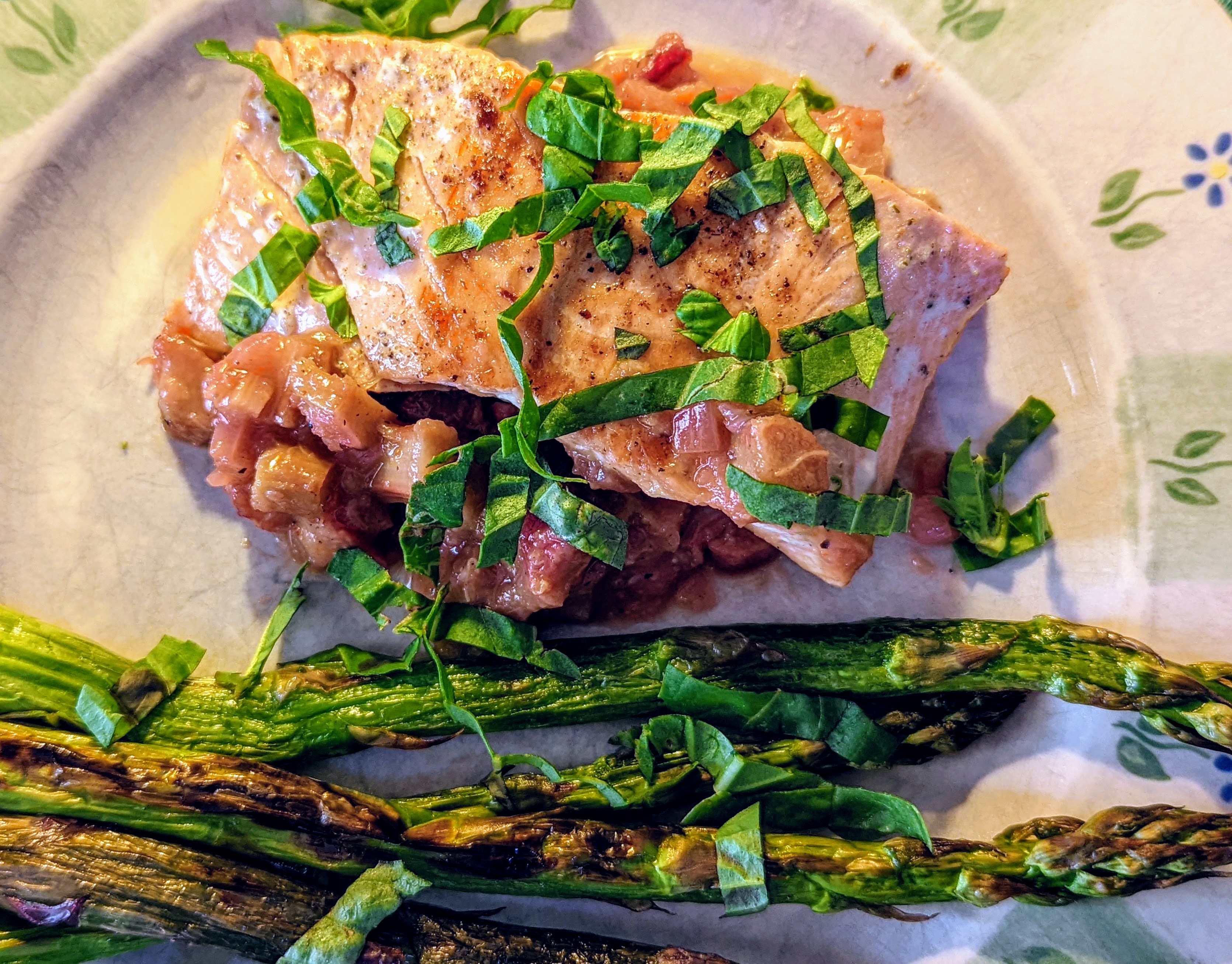
Salmon with Rhubarb Sauce

This dish seems more spring like, but because you can buy frozen rhubarb, it can be served any time. 


print

Salmon with Rhubarb Sauce


Source: Ellie Krieger
Serves 4

1 T olive oil
2 medium shallots, diced
1 1/2 inch piece ginger root, minced
8 oz rhubarb (red is the prettiest, but green tastes just as good), diced
1/4 c orange juice
1/2 c white wine
2-3 T honey
pinch of cayenne pepper
1/4 teas salt
1/8 teas freshly ground black pepper
4 6-oz salmon fillets, skinless if you prefer
1/3 c fresh basil leaves

Add shallots to heated olive oil in a 10-inch skillet or a medium saucepan. Cook until softened and add the ginger, cooking for about 30 seconds. Pour in the juice and wine; bring to a boil over high heat. Cook until the liquids have reduced by half and stir in the rhubarb. Reduce the heat to medium and simmer all until the sauce is thicker and the rhubarb has softened. Stir in the honey, cayenne and half of the salt. If the sauce is too thick, add a splash of water to loosen it a little.

In the meantime, heat up a skillet or a grill pan to cook the salmon. Heat to medium high and spray with cooking spray. Season the salmon with the remaining salt and pepper. Place the fillets in the skillet and cook for a total of 10 minutes per inch of thickness, flipping once, after the top has browned.

Cut the basil into ribbons and when the salmon is done, stir it into the sauce, except for a couple small portions for a garnish. Place about a quarter cup of sauce onto a serving plate and top with a salmon fillet and the garnishing basil.

Sunday, July 31, 2022

Hot Chicken Salad

I recently sorted through my old recipe card files as well as my mother's and was reminded of dishes that once were served regularly at my table. But as kids grew up and my interests changed some dishes faded from my memory. It was a reminder of how time pressures and the tastes of a larger group directed my cooking in the past. Here is one vintage dish that was a favorite for a while; I believe it was the potato chip topping that tasted best to kids. It's quick and easy and a one dish meal if you figure celery counts as your vegetable. 


print

Hot Chicken Salad


This was served to me at a church ladies' luncheon and probably originated with Martha Johnson, my good friend and mentor.
Makes a 9X13 pan

4 c cooked chicken, cubed or shredded
4 c chopped celery
1 3/4 -2 c mayonnaise (I prefer the lower amount)
1 c sliced almonds (or slivered if that is what you have)
1/4 c fresh lemon juice
4 teas grated onion
1 c grated cheddar cheese
2 cups crushed potato chips

Preheat your oven to 400F. Combine the chicken, celery, mayonnaise, almonds, lemon juice, and onion and place in a buttered  9X13 pan. Top with cheese and then with potato chips.

Bake for 15 minutes until heated through. The celery will be quite crisp-tender. If you prefer the celery to be softer, cook a bit longer.

Note: In January 2022, NYTimes Cooking published a very close rendition of this recipe along with an article which gives the antecedents of this old recipe. If you are interested, here is a link: Hot Chicken Salad

Sunday, June 5, 2022

Spiced Black Lentil Salad with Potatoes and Fish

Main dish salads are wonderful any time but, for me, summer is the best time to eat them.


print

Spiced Black Lentil Salad with Potatoes and Fish


Source: Alison Roman's book Dining In.
Serves about 6

The original recipe calls for good canned tuna which is how I usually make it. Once, though, I had some smoked trout in the freezer and used that. This salad is delicious either way. If you don't have all the ingredients you can leave some out or substitute with what you have in the fridge. I used red bell pepper instead of radishes.


 Begin with the lentils (these can be used as a side dish or in other recipes):

1 c black beluga lentils (or Le Puy or French green lentils), picked over and rinsed
salt
1/2 c olive oil
2 teas coriander seed, crushed
1 1/2 teas fennel seed, crushed
1 teas cumin seed, crushed
1/2 teas crushed red pepper flakes (or to taste)
4 garlic cloves, thinly sliced
1 lemon
6 small scallions, cut into 2" pieces
Freshly ground black pepper

Bring water to boil in a large saucepan and add lentils and a couple teaspoons of salt. Cook until the lentils are just cooked through 20-30 minutes. Drain them and set aside on the counter.

In a smaller pot, combine the oil with the spices and the garlic over your stove's lowest heat. Cook the spices and garlic in the oil until it is fragrant and the garlic has started to brown, approximately 15 minutes. Peel the lemon skin with a peeler in strips and add them to the pot along with the scallions and cook for another 5 minutes or so. Remove it from the heat.

Place the lentils into a bowl and toss with 1/4 c of the oil, strained if you think you won't like the texture of the seeds. Add salt and pepper to taste. Take the skinned lemon and squeeze half of it through a strainer into the lentils and stir to combine everything. Serve with the remaining oil to pass. Or use these lentils in the following recipe:

For the salad:

2 boiled and peeled eggs (or more if you prefer), halved
1/4 pd fresh green beans (I used home-frozen)
salt
1/4 pd small potatoes (purple are particularly pretty, but any boiling potato will do)
1 T lemon juice
freshly ground pepper
lentils and oil from above recipe
6-8 oz good oil-packed tuna or smoked trout, broken into chunks 
4 radishes
1/2 c dill, cilantro, tarragon, and/or parsley, tender stems and leaves (any combination)
lemon halves

Blanch the green beans for a few minutes in a pot of boiling water, cooking for 4 minutes. Scoop out of the water and drain and place in a large bowl.

In the same water cook the potatoes until tender, 10-15 minutes add water if necessary. You can also steam the potatoes if you prefer. When they are tender, remove from the water, allow to cool and cut into bite size pieces (again your preference) and place in the bowl with the beans.

Add the lentils to the bowl. Add the herb leaves and stir. Top with the fish, radishes and egg halves. Serve, passing lemon halves and any remaining spiced oil.

Thursday, November 11, 2021

Spicy Italian Sausage with Polenta


Another use for all the cherry tomatoes from my garden.


print

Spicy Italian Sausage with Polenta


Adapted from Cook's Country Magazine
Serves 4-5

1 batch of cooked polenta kept warm (cheesy grits can be subbed, see original recipe)

1 pd sweet Italian sausage, either in bulk or with casings removed
1 onion, chopped fine
approx 3/4 pd cherry tomatoes (the recipe calls for 10 oz but I used nearly 1 pd)
2 T chopped jarred hot cherry peppers or pepperoncini plus 1 T of the brine, see note below
3/4 c chicken broth, see note below

Over medium-high heat, cook sausage and onion in a large skillet until lightly browned. Break up the sausage as it cooks. When cooked, remove from the skillet and hold the mixture in a bowl. Retain 1 T of the fat in the skillet and discard the remainder.

Place the tomatoes in the hot skillet and cook without stirring. Allow them to start to brown and then stir in the chopped peppers. Continue cooking for a few minutes until tender. Add the broth, brine, and the reserved sausage mixture. Check for seasonings and add salt if needed. Cook approximately 5 minutes the sauce thickens until slightly and serve over the polenta. Top with basil chiffonade and/or grated parmesan cheese.

Notes:

I believe using pepperoncini will create a less spicy sauce which may be just what some diners need.

I added some crushed fennel seeds because the brand of sausage I used was light on that spice.

I used water and a few bay leaves as a substitute for chicken broth because I didn't want the added salt. 

Monday, October 25, 2021

Tomato Fritatta

I'm trying to use up a fall glut of tomatoes after a fast, freezing storm compelled us to strip our tomato plants of their bounty. Of course, this can be made any time of year. If you are buying the fruit out of season, cherry tomatoes taste better than others. 


print

Tomato Frittata

Serves 6-8

1 1/4 pounds ripe tomatoes, the best you can find
1 or 2 garlic cloves, minced
salt
freshly ground pepper
1 T fresh marjoram leaves or 2 teas fresh thyme leaves
8 large eggs
2 T milk
1 T extra virgin olive oil

Slice half of the tomatoes about a third of an inch thick and set aside (if you use cherry tomatoes, I advise slicing all in half). Halve the remaining tomatoes, squeeze to remove the seeds and chop. Mix these with the garlic in a bowl or retain on your cutting board until needed. 

In another bowl or large measuring cup whisk the eggs and add salt and pepper to taste. Stir in the milk and half of whichever herbs you choose. Add the chopped tomato and garlic. Stir to mix well.

Place the olive oil in a 10-inch nonstick skillet (oven safe) and heat over medium-high heat until you can feel heat when you hover your hand over the pan. You can test by dropping some of the egg mixture in and if it sizzles the pan is ready. Add the egg mixture to the skillet and tilt the pan until it evenly covers the bottom. Allow to cook a bit; then lift the edges with a rubber spatula while tilting the skillet again, allowing some of the eggs to seep under the cooked bottom. Do this a few times. When the eggs have set somewhat, turn the heat to low and place tomato slices on the top. Cover the pan and cook about 10 minutes; gently shake it a couple of times. You may also want to look at the bottom to ensure it doesn't burn; again use a rubber spatula to lift and check. 

Once the eggs are mostly set place the skillet under the broiler about 6 inches from the heat. Cook until the top browns slightly and puffs a little. Remove from the broiler and give the skillet a shake to ensure the frittata doesn't stick.  Allow to rest for 5 minutes. Sprinkle the remaining thyme or marjoram leaves over the top. Slice the frittata with a plastic knife while in the pan (you don't want to scratch the surface) or slip it carefully on to a cutting board. Cut into wedges and serve hot, although it tastes great at any temperature.

Leftovers are best used within a couple of days.

I'm thinking of trying this with chopped cooked bacon and/or cheese, shredded and mixed into the eggs or grated Parmesan on top. But it is good as it is.

Saturday, April 17, 2021

Slow-cooker Roasted Mississippi Roast

I cooked this several weeks ago and became an instant fan; the pepperoncini make it especially tasty but not particularly hot.


print

Slow-cooker Roasted Mississippi Roast


Adapted from: NY Times Cooking
Serves: 8-10

1 boneless beef chuck roast or top or bottom round roast, 3-4 pds (if you choose to use a bone-in roast add an extra 1 to1 1/2 pds to compensate for the bone)
1-2 teas kosher salt
1 1/2 teas freshly ground black pepper
1/4 c AP flour
2-3 T neutral oil
4 T unsalted butter, cut into 4 pieces, (if you have a fat cap on your roast, you can cut this butter down, or remove the fat cap)
8-12 pepperoncini (I like even more since they didn't seem to retain heat in slow cooker)
2 T mayonnaise
2 teas apple cider vinegar
1/2 teas dried dill
1/4 teas sweet paprika
1 teas buttermilk, optional
chopped parsley, for garnish

Rub the roast with the salt and pepper all over. Then sprinkle the flour over all and rub it into the flesh with your fingers.

In a large sauté pan over medium-high to high, heat the oil until it shimmers and threatens to smoke. Set the roast into the pan and cook on all four sides until you have a well-browned crust. Remove from the pan and put the roast into the slow cooker. Drop in the butter and the pepperoncini peppers and turn on the cooker to low.

Combine the mayonnaise, vinegar, dill, and paprika in a small bowl. Stir in the buttermilk and pour all into the cooker spreading over the roast. Replace the lid and continue cooking for 6-8 hours without disturbing it. I found 6 hours was sufficient. At any rate, after 6 hours take the lid off to see if the roast is easily shredded by pulling it apart with 2 forks. If it isn't tender, replace the lid and continue cooking for another 1-2 hours.

When tender continue shredding and mix with the gravy in the cooker. Top with parsley to garnish and serve with buttered noodles, rice, or potatoes (my preference). I used some of my leftovers for pulled beef sandwiches.


Monday, February 8, 2021

Sheet-pan Baked Feta with Vegetables

I made this this past holiday season with the last of my garden tomatoes and thought it one of the most beautiful dishes I've cooked; tastes great, too.

On it's way to the oven


print

Sheet-pan Baked Feta with Vegetables

Adapted from:  NY Times Cooking
Serves: 4, as a main dish; more if a starter

1 bunch broccolini, trimmed and thick stalks split lengthwise or cut in chunks or broccoli, cut into bitesize pieces
1 pint grape tomatoes, halved (about 2 c)
1 small red onion, peeled and cut into thin slices 
3 cloves garlic, peeled and halved, optional
3 T olive oil, plus more for serving
1 teas ground cumin
1/2 teas red pepper flakes, or to taste
salt and freshly ground black pepper, to taste
1 lemon, zested and cut in two, one half for squeezing and one for serving wedges 
2 (6- to 8-oz) blocks feta, cut into slices, half inch to an inch thick or vertically into strips
1/2 c fresh basil leaves or cilantro leaves and tender stems, roughly chopped (optional)

Set your oven rack in the lower third and preheat the oven to 400F. Combine the tomatoes, garlic, and onion wedges on a sheet pan and drizzle with the olive oil; toss. Sprinkle with the cumin and red-pepper flakes, and some salt and pepper, and toss once more. Place in the oven and cook for 5 minutes. Pull the baking sheet out and add the broccolini and lemon zest. Squeeze one half of the lemon over all and toss to combine. Place the feta slices among the vegetables. It's all right if they break up a bit (at least one NY Times commenter prefers crumbling the feta into good sized chunks).

Place in the oven and cook for 15-20 minutes, stopping half way through to stir as well as you can while avoiding disturbing the feta. Cook until the broccolini is charred at the tips and the stems can be pierced easily. The tomatoes should break down a bit and their skin should blister.

Remove from the oven; drizzle with more olive oil. Top with herbs, if using. This can be served as is with crusty bread or over orzo, pearl couscous, or farro. Pass remaining lemon wedges.

Notes:

At my altitude (nearly 5000 feet, I had to cook this longer than the suggested time.

If you go to the NY Times Cooking website and peruse the comments, you'll find that this recipe is quite versatile. Home cooks have employed a grill for roasting, have used different seasonings (Italian herbs, for example), and have added other vegetables, including corn, red peppers, summer squash, potatoes and/or olives. There are suggestions for marinated tofu or a different cheese, such as halloumi. Commenters have added chicken thighs (cooked for 35 minutes before adding the rest of the ingredients), sausage, and shrimp (added late so they don't overcook). And some have added canned (and drained) beans. 

Friday, December 4, 2020

Uncle Sam's Cincinnati Five-way Chili (Skyline-style)

Here's a yummy and hearty recipe from my brother and Betsy's uncle.  


print

Cincinnati Five-way Chili (Skyline-style)
guest post by Uncle Sam


Souce: a pamphlet from the American Heart Association years ago
Serves: About three

Ingredients:

1 lb. hamburger (lean for healthy, fatty for tasty)
2 medium onions, diced (one onion to cook, one to serve raw as a garnish)
2-3 cloves of garlic, minced
1 teas chili powder (or 1/2 teas red chile flakes) 
1/2 teas ground cumin
1/2 teas ground cinnamon
1/4 teas ground allspice 
1 can diced tomatoes (14 oz. can, NOT drained)
1 can kidney beans (14 oz. can, drained and rinsed)
3 T apple cider vinegar
2 T (heaping) semisweet chocolate chips
Grated cheddar cheese (as a garnish)
1/3 lb. spaghetti 


Brown the hamburger and sweat about half of the diced onions in a large pot. Bloom the minced garlic (heat directly against a cleared portion of the inner surface of the pot) for about two minutes. Bloom the chili powder, cumin, cinnamon, and allspice in the pot for about one minute. Add the tomatoes, kidney beans, vinegar, and chocolate chips. Simmer (the longer the better, all day if you have time, adding water if necessary). Cook the spaghetti to al dente in a separate pot about 15 minutes before serving. 

Serve in bowls, placing the chili directly on top of the spaghetti. Garnish with diced raw onions and grated cheddar cheese.

Note: the proportions of beef and bean can be  modified (if you don't have enough beef, use another can of beans). 


Monday, September 14, 2020

Melanie's Green Chile Stew

Late summer and early fall bring an unmistakable and delicious aroma to New Mexico when the chile harvest is roasted in gas cylinder roasters at roadside stands, markets, and supermarkets. It's one of the best things about living in New Mexico and I've missed it this year since I'm home more. However, I was able to purchase chile curbside from a grocery store and roasted them on my grill so I didn't totally miss out on the pleasant smell of roasted chile. This soup is from my sister-in-law who is a native New Mexican with special thanks from my brother Sam who gave me his copy of the recipe. 


print

Melanie's Green Chile Stew


This is one of those home recipes with a good deal of latitude about ingredient amounts, especially with the green chile. Chile can come mild, medium, or hot and people come with varying abilities to tolerate the heat. The original recipe calls for at least a cup and a half of chopped green chile. While the heat is an important aspect of this soup, the flavor of the chile is paramount in my mind. If you are like me, a bit of a wimp when faced with high heat, you should look for mild chile. Stir in a little at a time and taste as you go. I know from experience there's nothing quite like the dismayed look on the faces of a table full of hungry folks who can't eat what you cooked for them. 

 As for potatoes, I think a waxy potato is best, but if you don't mind a russet falling apart while cooking go ahead and use a baking potato. 

2 pds ground beef
1-2 onions, depending on size
salt and pepper to taste
several cloves of garlic, minced
2-3 quarts chicken broth
4-6 potatoes, cut into 3/4-inch cubes
green or Hatch chile, see note above--stir in a little at a time, tasting as you go
1 T ground cumin
mexican oregano
bay leaf

Brown the ground beef with the onions. When the onions are translucent and the beef is browned, add the garlic and cook for just a minute. Add the broth. Stir in the potatoes, chile, spices and herbs. Cook until the potatoes are done. Serve with flour tortillas, or corn, if you prefer. Chopped epazote as a garnish is delicious but not everyone can lay their hands on it.

Note: 

I suppose you could substitute poblano chile for the Hatch, or New Mexican chile and this would still be good but it wouldn't be quite the same. New Mexican chile is becoming more available all the time and I've heard of it being sold in Utah, Colorado, and Virginia, so I imagine it is being introduced other places as well. Hoping you can try it with the real thing sometime.  

Friday, September 11, 2020

Chicken with Black-eyed Peas and Cherry Tomatoes

As we approach the end of summer, my garden-based meals start to reflect heartiness often found in fall and winter dishes. I credit the harvest of my black-eyed peas. This recipe is one that can be enjoyed all year round. 


print

Chicken with Black-eyed Peas and Cherry Tomatoes


Source: Christian Science Monitor which adapted a Bon Appétit recipe for sausage
Serves 6-8

4 pieces bacon, cut in quarter inch slices
8 bone-in chicken pieces (if using breasts, cut them in half)
salt and pepper
1 rounded teas dried thyme, divided (or 1 T fresh thyme)
1 medium onion, halved and sliced about 1/4-inch thick
3 cloves garlic, minced
2 1/2 c chicken broth
1/2 c dry white wine
1 11-oz or 12-oz frozen shelled black eyed peas, thawed (about 2 cups)
8 oz fresh green beans, trimmed
8-10 oz cherry tomatoes, halved if large

Place the bacon into a nonstick skillet or saute pan and cook until the fat is rendered and it is as crisp as you like. Using a slotted spoon remove the bacon and hold until later.

Sprinkle the chicken pieces with salt and pepper and half of the dried thyme. (If you're using fresh thyme don't add it at this point.) Place the chicken in the pan and cook over medium-high heat and brown the chicken on both sides. Move chicken to a plate or half sheet pan. Remove some of the bacon fat leaving a couple of tablespoons in the pan. 

Cook the onion slices until translucent. Add the garlic and the rest of the dried thyme and cook about 1 minute, until fragrant. Pour in the wine and bring to a boil and add the broth. Stir in the black-eyed peas until combined.

Return the chicken pieces to the pan as well as the juices that accumulated while set aside. Reduce the heat and cover the pan and cook until the black-eyed peas are beginning to become tender, around 15-20 minutes. Stir in the green beans and cook for about 5 minutes more. Add the cherry tomatoes and cook until heated about 5 more minutes. The tomatoes should begin to split and the broth should be thickening, If you are using fresh thyme, now is the time to add it. Taste the broth and add salt and pepper if necessary.

While the black-eyed peas and vegetables are cooking, it's a good idea to check the temperature of the chicken pieces. With a probe thermometer make sure the breast pieces are at 165F and the thighs and legs are at 175F. If the chicken reaches the target temperatures, remove and set on a plate while everything else cooks. Replace in the pan and warm the chicken before serving with the chicken placed on top of the vegetables. Sprinkle the reserved bacon over all. 

Serve the chicken on top of the vegetables and black-eyed peas.

Notes: 

You can shell your own black-eyed peas in season if you wish. Aim for about 2 cups of fresh shell peas.

If you prefer to skip the wine, increase the broth to 3 cups and just before serving the dish stir in a couple of tablespoons of white wine vinegar or sherry vinegar.

If you are cooking this when available green beans are substandard, I think you could experiment with subbing other vegetables, such as halved brussels sprouts (although you might need a larger pan since they don't have the slim lines of a green bean). 

Tuesday, September 1, 2020

Pork Chops with Salted Plums

One of the best things about summer is having fruits with meat. This summer has been more challenging for getting fruits and sometimes what I get is less that the best. This recipe is a good one for plums that come from a grocery store instead of a market or a backyard.


print

Pork Chops with Salted Plums


Source:  Alison Roman in New York Times Cooking
Serves 4

Since I'm currently not going to my regular butcher and instead take what I get in a curbside pickup, I learned this recipe works with a thinner pork chop, too. I didn't brine the thinner chops but I was careful not to overcook them--I had to ignore timing recommendations. Thin chops might benefit from a brine, especially if you keep the salt and fish sauce lower in the plums. I did not slice these chops but served them whole.


2 bone-in thick pork chops (1 1/4 to 1 1/2 inches thick, about 1 1/2 pounds in weight)
salt and freshly ground pepper
1 pd medium  slightly under-ripe plums, pitted and sliced
1/2 small red onion, thinly sliced
1/4 c unseasoned rice wine vinegar or fresh lime juice, plus more, if needed
1/2 teas fish sauce (optional, but tasty)
1 T vegetable oil
1 c fresh mint leaves
olive oil, for drizzling

Sprinkle the pork chops with salt and pepper and set aside.

Place the plums and onion slices in a bowl and toss with the vinegar and fish sauce. Add a bit of salt and pepper and taste a plum. It should taste tangy and salty. If it doesn't, add more vinegar and salt. Set aside.

Heat a large skillet over medium-high heat and add the vegetable oil. Add the pork chops when hot and cook. Keep the chops in place for 4-6 minutes and don't move until well browned. Flip the chops and continue to cook until this side is browned about 3-5 minutes. If you have a meat thermometer you may want to use it here. I found that these recommended times resulted in quite pink meat. USDA and the National Pork Board recommend cooking to 145F in addition to a 3-minute rest. 

Remove from heat and place the chops on a cutting board. Allow them to rest while you briefly cook the plum and onions in the same skillet. Toss the mix and try to scrape up the fond and cook only long enough to wilt the onion. 

The author of this recipe instructs cooks to slice thick pork chops and serve with the plum mixture, topping the pork slices with the mint and drizzling with olive oil just before serving. This works tolerably well with very thick pork chop but it leaves the bone and bits of the chop languishing on the cutting board. But, as I mentioned above, thinner chops can be substituted. 

Friday, August 21, 2020

Ratatouille

This vegetable stew is one of my favorite things to eat in late summer when I have an abundance of vegetables in my garden. But it can be cooked any time if you choose to use canned tomatoes.

The author of this recipe utilizes a method that keeps all the flavors fresh tasting by keeping the parts separated a bit while cooking so it doesn't turn into a mushy mess.

print

Ratatouille


Source:  The Meat Lover's Meatless Cookbook by Kim O'Donnel
Serves: 6

1 large globe eggplant (about a pound) or 3 thinner Asian eggplants
salt for leaching eggplant
5 T olive oil, divided
2 medium onions sliced thinly (about 2 cups)
3 red or yellow bell peppers, seeded and julienned (about 2 1/2 c)
4-6 garlic cloves, minced
1 large yellow or green zucchini, cut into half moons (about 2 1/2 c)
ground black pepper
6 medium vine-ripe tomatoes, roughly chopped (about 3 c) or 1 (28-oz) can plum tomatoes
1-2 sprigs of fresh thyme or 1 teas dried
1 teas dried oregano
chopped fresh basil and/or parsley, for garnish

Preheat the oven to 450F.

Dice the eggplant into half-inch cubes (about 5-6 c). Sprinkle with salt and place on a rack or in a colander to drain for about 30 minutes. (This leaching step is not required but it will reduce liquid.)

With a towel pat the eggplant dry. Place on a baking sheet and drizzle with 2 T of the olive oil. Toss and spread into a single layer. Put the eggplant in the hot oven and roast for 15 minutes until the eggplant browns and shrinks substantially. Take it out of the oven and set aside.

You'll need a large skillet as well as a large lidded saucepan or Dutch oven which you can keep on a burner on the lowest warm setting.

Heat another 2 T oil in the skillet over medium heat. Cook the onions until tender and stir in the peppers with a generous pinch of salt. Cook until the peppers are soft.

Add half the garlic and stir for a minute and transfer all from the skillet to the Dutch oven (or saucepan).

In the skillet heat 1 T olive oil over medium-high heat and add the zucchini and some salt and pepper. Cook until the zucchini is tender but still retains its color. Add the remaining garlic; cook for a minute and then add the mixture to the Dutch oven. Stir the vegetables together.

Chop or mash the tomatoes with a potato masher so they are broken up. Add them to the vegetables along with the thyme and oregano. Stir in the eggplant. This mixture will be thick but as the tomatoes release liquid it will loosen up. If it remains thicker than you like add a few tablespoons of water. Raise the temperature to medium-low and mix the ingredients well. Cover and allow to cook for 12-15 minutes until heated through. Taste for seasonings and remove herb sprigs. Serve.

This can be served with couscous, quinoa, or orzo. Crusty bread would be great, too.

Note:

If you can't entertain the idea of heating your late summer kitchen with a 450F oven, you can pan-roast the eggplant before you start cooking everything else. Heat the olive oil in your large skillet (can be nonstick if you prefer) over medium high heat and cook the eggplant after leaching and patting dry. Stir from time to time so it doesn't scorch and cook until browned and tender. Set aside in a bowl. Wipe the skillet with a paper towel and begin cooking the onions as instructed above.

If I'm in a rush, I'll employ more than one skillet and cook onions and zucchini at the same time but in separate pans and you'll be able to control how "done" each vegetable becomes. This will speed preparation somewhat but will make for more pans to wash, of course.


Monday, July 27, 2020

Sheet Pan Maple-Mustard Chicken Thighs with Red Cabbage

Early in the stay at home orders caused by the pandemic of 2020, Betsy and I chatted and learned that we had both made this recipe within the same week without having told one another of our interest in it. It's a very yummy dish.

print


Sheet Pan Maple-Mustard Chicken Thighs with Red Cabbage


Source:  Washington Post, January 16, 2020
Serves:  4-6

I haven't done it, but I believe green cabbage may be substituted for the red if that is what you have. If you do use green I suggest you substitute a yellow onion for the red. However, a red cabbage results in an extraordinarily attractive dish.

2 1/2 T grainy mustard
3 T maple syrup, divided
1/2 teas freshly ground pepper
2 1/2 pds skin-on bone-in chicken thighs
8 c thinly sliced red cabbage, about 1/2 a medium head
1 medium red onion, sliced thinly into half moons
5 T apple cider vinegar, divided
2 T extra-virgin olive oil
1 teas caraway seeds
1/2 teas kosher salt; add more to taste

Note: the more thinly the cabbage is sliced, the more quickly it will cook.

Place the oven rack in the middle and preheat the oven to 450F.

Mix the mustard, 1 T of the maple syrup, and 1/4 teas of the pepper into a small bowl.

Put the chicken thighs on a lightly oiled large rimmed baking sheet and pat dry with paper towels. Pour the mustard mixture over the thighs and rub it all over the skin. Arrange the thighs skin side up and place in the oven; roast for 20 minutes or so, until the skin has started to crisp up.

Remove the baking sheet and reduce the heat to 375F.  Remove the chicken from the sheet to a plate and discard accumulated fat.

Toss the cabbage, onion, 4 T of the vinegar, onion, oil, and remaining 2 T of the maple syrup as well as caraway seeds and salt plus the remaining 1/4 teas of black pepper. Dump the cabbage mix onto the baking sheet, spreading it evenly. Nestle the chicken with the skin side up into the cabbage and return the baking sheet to the oven.

Roast for 20-25 minutes until the cabbage has softened somewhat and the thighs are measuring 170F on a meat thermometer. If the chicken is done before the cabbage, pull the thighs off the pan and keep warm on a platter, covering with foil. Return the cabbage to the oven covered with foil until it has reached the tenderness you desire. Remove from the oven.

Use the remaining tablespoons of vinegar to drizzle over chicken and serve with cabbage.

Monday, February 17, 2020

Sheet Pan Salmon and Brussels Sprouts

This is one of those recipes that hits all of the dietary needs in our family: low carb options, deconstructable for picky eaters, a healthy meat, and delicious on top of it all. If you shred the sprouts in a food processor, it's not bad on time, either.


print

Sheet Pan Salmon and Brussels Sprouts

1 pd (or more) brussels sprouts, trimmed
3-4 scallions, trimmed, white and green parts thinly sliced (about 1/2 c), optional
1 jalapeno, thinly sliced (about 1/4 c), optional or to taste
2 T toasted sesame or extra virgin olive oil
kosher salt and black pepper
4 (6-oz) skin-on salmon fillets, about 1-inch thick
1/4 freshly squeezed lemon, lime or tangerine juice
2 T rice vinegar
2 T soy sauce
Honey, to taste, optional

Prepare your sprouts. You can either slice them thinly (which is about 4 1/2 c) or you can shred them in the food processor. Though I prefer the slices for eating, I'm going to use the processor in the future for time's sake.

Heat oven to 400F. On a large sheet pan, mix the sprouts, scallions, jalapeno, and oil, then spread over entire pan.

Pat the salmon dry, sprinkle with salt and pepper, then place them on the sheet pan amongst the brussels sprouts. Roast until the salmon measures at least 120F on an instant read thermometer, about 12-15 minutes.

While the fish and brussels sprouts are roasting, mix together the juice, vinegar, and soy sauce, along with 2 T water.

Drizzle the sauce on your own serving of fish and brussels sprouts, according to preferences. Serve with a side of basmati rice and enjoy. 

Sunday, February 9, 2020

Chili

This is simply a basic meat and bean chili and the recipe served me well for many years.


print

Chili                                 


Adapted from an old recipe shared decades ago by a friend named Joyce from our first Air Force assignment
Yields a Dutch oven full of chili.

For the beans:

2 cups pinto beans, sorted and brined overnight in 2 quarts of water and 1 1/2 T salt
1/2 onion
1 carrot cut into 2 inch chunks
1 stick of celery cut into 2 inch chunks
2-3 cloves of garlic, peeled
1 bay leaf
Water

Before cooking, drain the beans from the brine and rinse in a colander. In a large saucepan (I used a 4 quart pot) place the beans and the vegetable aromatics (onion half, carrot and celery chunks, garlic) and bay leaf. Cover generously with water (an inch or two above the level of the beans) and bring to a boil, watching so you avoid a boil-over. Lower heat to a simmer and cook for several hours until beans are done (the amount of time this will take depends on the age of the beans but mine took about three hours).

The rest of the ingredients:

1/2-1 pound of ground beef
1 large onion, chopped
1 teas salt
2 cloves garlic, minced
1/2 teas pepper
2 T chili powder
1 can tomato paste
1 (28-oz) can whole tomatoes (or crushed tomatoes)
1 (4-oz) can of diced green chiles or 1/2 c frozen chopped chiles, or to taste
1 cup water.

In a Dutch oven cook the ground beef, onions, and salt together until browned. Add the garlic and cook for half a minute or so until fragrant. Move the mixture to the edges of the pan and place the spices in the center of the pan and toast for a minute. Stir the spices into the meat and add the tomato paste and cook for a few minutes until the paste has darkened. Pour in the liquid from the whole tomatoes. Crush the tomatoes by hand or in the blender or food processor and place in the skillet. Stir in the green chiles and water. Bring to to strong simmer and then lower the heat and simmer for a couple hours stirring occasionally. If it gets too thick add some more water or some of the bean broth.

Note: To streamline this process you can worry less about building flavor. Add the garlic, spices, and tomato paste together. Then stir in a can of crushed tomatoes and the green chile. Continue with the recipe.

When the beans are done and are beginning to break apart remove some of the bean broth (hold a generous amount in reserve) and all the spent aromatics. Drain most of the remaining liquid, if needed. Pour the beans into the meat mixture in the Dutch oven. Stir well. Add some of the reserved bean broth until the chili is the consistency you prefer. Stir again and cook together for an hour at a low simmer. Check the consistency again and add more bean broth if needed. Taste for seasonings and add salt. If you like spicier chili add more chiles or stir in a bit of powdered cayenne. Serve with warm cornbread.

Sunday, December 1, 2019

Crispy Chickpeas and Lamb with Greens and Garlicky Yogurt

My Thanksgiving was abbreviated; even so, later this weekend I felt the need for a meal that seemed healthier. Beans and greens seemed just the thing.


print

Crispy Chickpeas and Lamb with Greens and Garlicky Yogurt


Serves 4

 for the Garlicky Yogurt

1 c full fat or 2 % Greek yogurt
1 garlic clove, minced
1 T fresh lemon juice
kosher salt and freshly ground pepper, to taste

for the Chickpeas and Lamb 

1-2 bunches Swiss chard, mustard greens, or kale
6 T olive oil, divided
12 oz (3/4 pd) ground lamb
3 garlic cloves, minced
1 teas cumin seed
salt and freshly ground pepper
1 (15 oz) can chickpeas, drained and rinsed
1/2 teas crushed red pepper flakes (more or less to taste)
fresh tomatoes, quartered or roasted tomatoes for a garnish

Make the yogurt (it can be made ahead up to 5 days and kept in the fridge--the garlic will get stronger). 

Rinse the greens and separate the stems from the greens. Slice the stems (except for kale) and tear the leaves into 2-inch pieces. Set aside.

In a large skillet over medium-high heat place 2 tablespoons of the oil. Add the lamb, garlic, cumin, and some salt and pepper (you can test it later and add more if needed). Cook, browning the lamb and breaking it as it cooks until it is crispy and browned. Use a slotted spoon to transfer the lamb into a bowl. Leave the drippings in the skillet.

Add the remaining 4 tablespoons of oil and heat for a few minutes. Stir in the chickpeas and red pepper flakes and season with salt and pepper. Shaking the skillet from time to time, cook until the chickpeas are very well browned and starting to get crisp. Return the lamb to the skillet and stir well. Then place this mixture in a large bowl. Leave a little oil in the skillet.

Stir the sliced stems into the skillet and sprinkle with salt. Cook a couple of minutes (they should be a bit crunchy in the final dish)  and add the leaves and stir until coated with the oil. Cook just until wilted. 

Place the yogurt into the bottom of four bowls and top with the chickpea and lamb mixture and the greens. Top all with some of the tomatoes. Sprinkle with salt and pepper if desired and eat immediately.

Note:

I'm sure another bean could be substituted for the chickpeas.